
Men’s Health, Hormone & Performance Insights
The Fit and Fine Health Blog shares expert guidance from Dr. David Hall—combining medical insight, real-life experience, and practical strategies to help you live stronger and healthier.
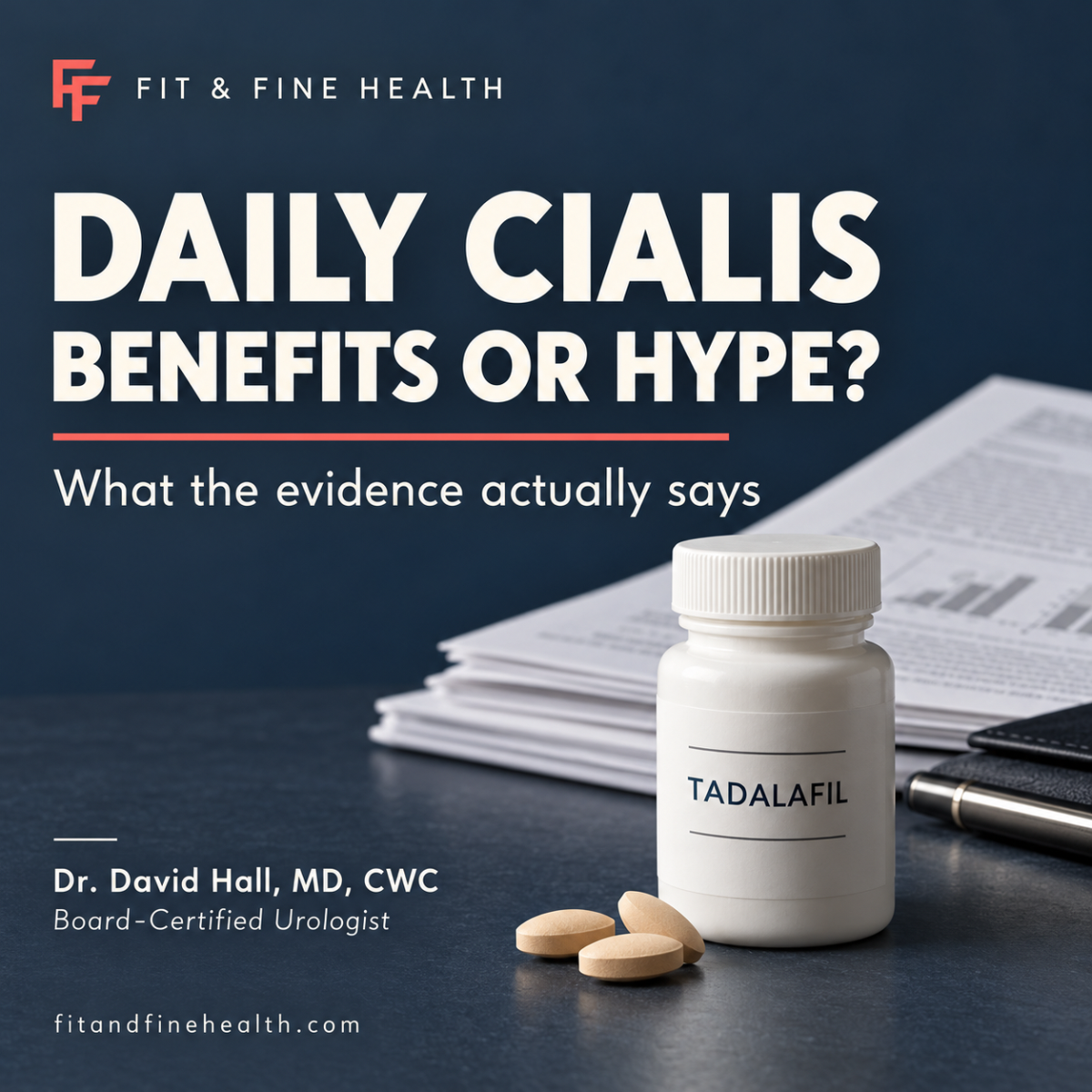
Daily Cialis: Legitimate Health Benefits or Another Influencer Miracle Pill? What the evidence really says about erections, urinary symptoms, cardiovascular health, testosterone, and longevity.
Board-certified urologist reviews daily Cialis benefits for ED and BPH, heart-health studies, testosterone and muscle claims, and important safety risks.

Hims Launches TRT: A “New Era” for a 90-Year-Old Hormone?
Nearly nine years after launching, Hims is announcing a new era in testosterone care. Dr. David Hall examines the irony—and what men should expect beyond a prescription.

ED and a Calcium Score of Zero: Is Your Heart Really in the Clear?
A zero calcium score is usually reassuring—but it does not exclude every form of coronary disease. Learn when ED should prompt a cardiovascular conversation.

Cardio The Right Way: How To Support Fat Loss Without Undermining Your Lifting
Cardio does not have to exhaust you to be useful. Learn how to fit aerobic training around lifting, whether fasting matters and what supports long-term progress.
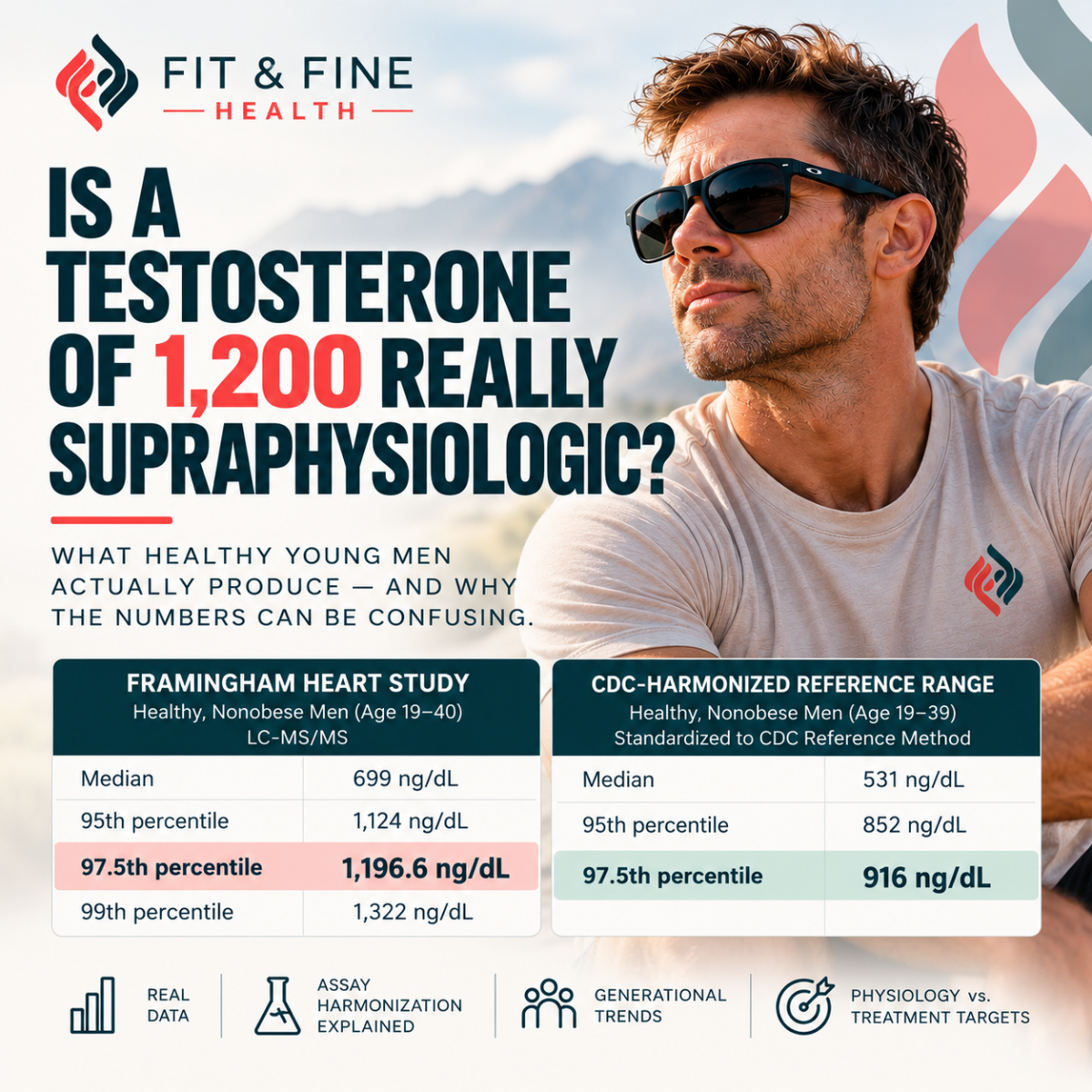
Is a Testosterone of 1,200 Really Supraphysiologic? What Healthy Young Men Actually Produce
A testosterone level of 1,200 ng/dL is often labeled “supraphysiologic.” But healthy young men in the Framingham Heart Study were measured near—and even above—that level. So why does the modern CDC-harmonized reference range top out around 916? The answer involves assay calibration, population percentiles, SHBG, free testosterone and the difference between physiologic possibility and an appropriate TRT target.

We Play The Long Game: Why Sustainable Health Beats Short-Term Optimization
Discover the Fit & Fine Health philosophy: evidence-based men's health, sustainable fitness, hormone optimization, and healthy aging for the long game.

Does Testosterone Cause Tendon Ruptures? What the Research Actually Shows
Studies have linked prescription testosterone with Achilles, biceps, rotator cuff and other tendon injuries. But does TRT actually weaken tendons—or could rapidly increasing strength and training loads help explain the association?

TRT and High Hematocrit: Does “Thick Blood” Really Mean Blood Clots?
Can TRT raise hematocrit and increase blood clot risk? A board-certified urologist explains erythrocytosis, the 52–54% thresholds, phlebotomy, sleep apnea, and smarter TRT management.

HIGH TESTOSTERONE IN MEN: WHEN IS IT ACTUALLY TOO HIGH?
Can men naturally have testosterone levels of 900–1,100? Urologist Dr. David Hall explains high testosterone, SHBG, free T and when testing matters.

How Often Should You Inject TRT? Why Testosterone Injection Frequency Matters
How often you inject testosterone may matter almost as much as the dose itself. Learn why every-two-week injections can create larger peaks and troughs, when weekly or twice-weekly TRT may provide smoother exposure, and why IM vs SQ or cypionate vs enanthate may matter less than many people think.

Erectile Dysfunction and Heart Disease: Why ED Can Be an Early Warning Sign
ED isn’t always just a sexual problem. Because erections depend on healthy blood flow, worsening erectile function can sometimes be an early clue to cardiovascular or metabolic disease.

Still Have ED on TRT? Why Testosterone May Not Be the Problem
Still have erectile dysfunction even though your testosterone is optimized? Learn why vascular health, diabetes, sleep apnea, medications and other causes of ED may matter more than your TRT dose.

Experience Isn’t Just Years in Practice: Why Clinical Volume Matters
Two clinicians can read the same guidelines and prescribe the same medication while having very different levels of experience. Here’s why clinical volume, pattern recognition, feedback, and long-term patient follow-up can matter in testosterone and men’s health care.

What Blood Tests Should Men Actually Get? Why a Testosterone Level Alone Isn’t Enough
A total testosterone level alone cannot explain a man’s hormonal, metabolic or cardiovascular health. Learn what a comprehensive men’s health lab evaluation can include — from free testosterone, SHBG and LH to ApoB, Lp(a), thyroid testing, CBC, PSA, and metabolic markers.

What If Viagra or Cialis Stops Working? Why ED Medications Fail — and What to Do Next
Viagra or Cialis used to work—but now the results are inconsistent or disappointing. Learn why ED medications may become less effective and what to evaluate before simply increasing the dose.

Choosing a TRT Clinic in Northeast Indianapolis: What Men Should Look for Beyond Convenience
Not every testosterone clinic approaches care the same way. Learn what men in Northeast Indianapolis should ask about provider experience, diagnosis, fertility, labs, monitoring, and long-term TRT management.

Who Should I See for Low Testosterone?
Low testosterone can be treated by primary care doctors, urologists, endocrinologists, and dedicated TRT clinics—but the quality of care varies widely. Here’s how each model differs and what men should look for before choosing a testosterone provider.

Why Fit & Fine Exists: A Better Model for Men’s Health
Traditional healthcare can add layers of cost, delay, referrals, insurance requirements, and fragmented care. Fit & Fine Health was built around a different model : direct physician-led men’s health care with transparent pricing, comprehensive evaluation, and fewer barriers between the patient and the doctor.

Writing Testosterone Is Easy. Managing It Well Isn’t.
Getting testosterone is easy. Managing it well requires far more than writing a prescription. Learn what men should look for when choosing a testosterone provider or TRT clinic.

Testosterone, TRT and Fertility: Can You Treat Low T Without Losing Sperm?
Testosterone replacement therapy can dramatically suppress sperm production—but infertility is not always permanent. A board-certified urologist explains TRT, azoospermia, hCG, semen analysis, fertility recovery, and treatment options for men who still want children.